
Museums Victoria
More than 200 specimens and objects from the Natural History Museum, London, in a Melbourne staging designed by Studio Peter King for Museums Victoria and built by Synthesis and Show Works (now TSA).
Museums Victoria
Build Studio Peter King's Melbourne staging for the first collection the Natural History Museum, London had loaned to an Australian museum.
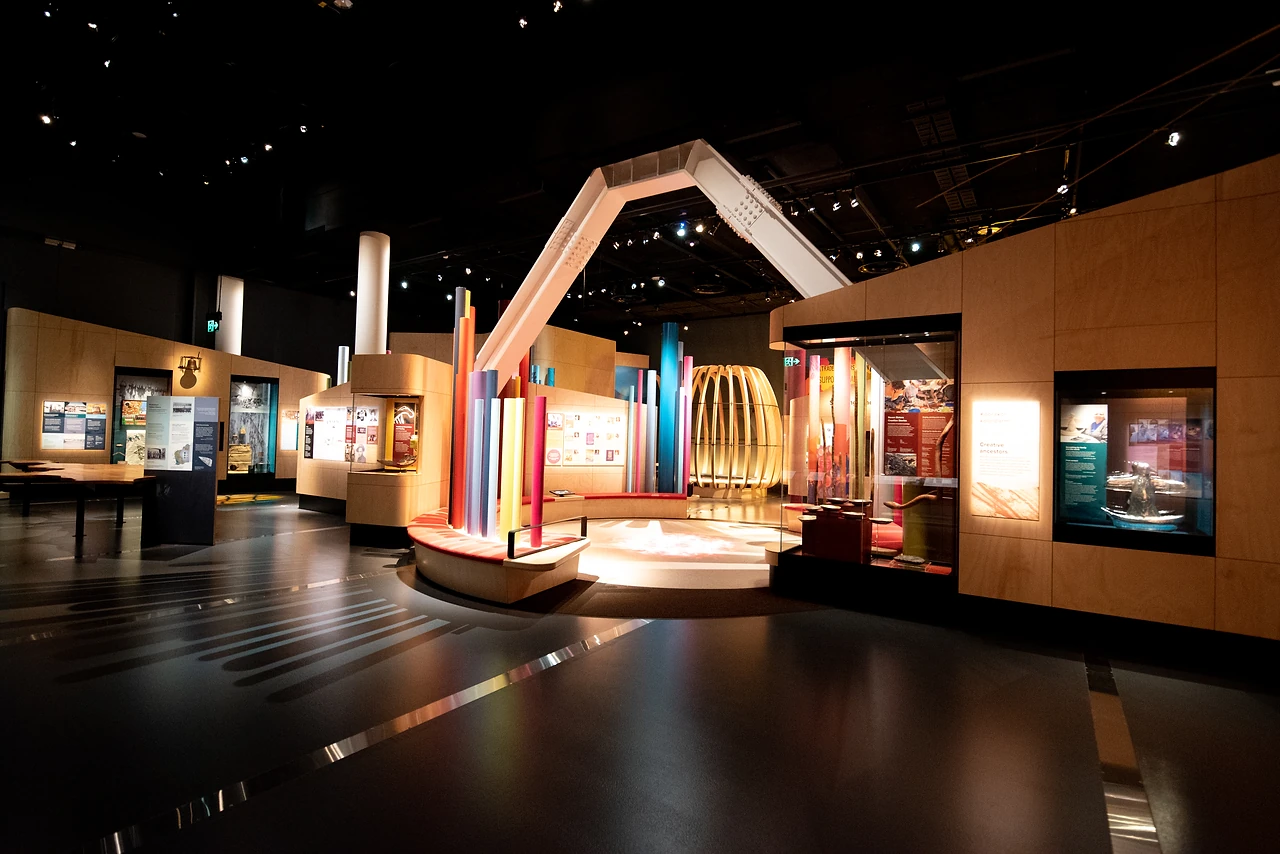
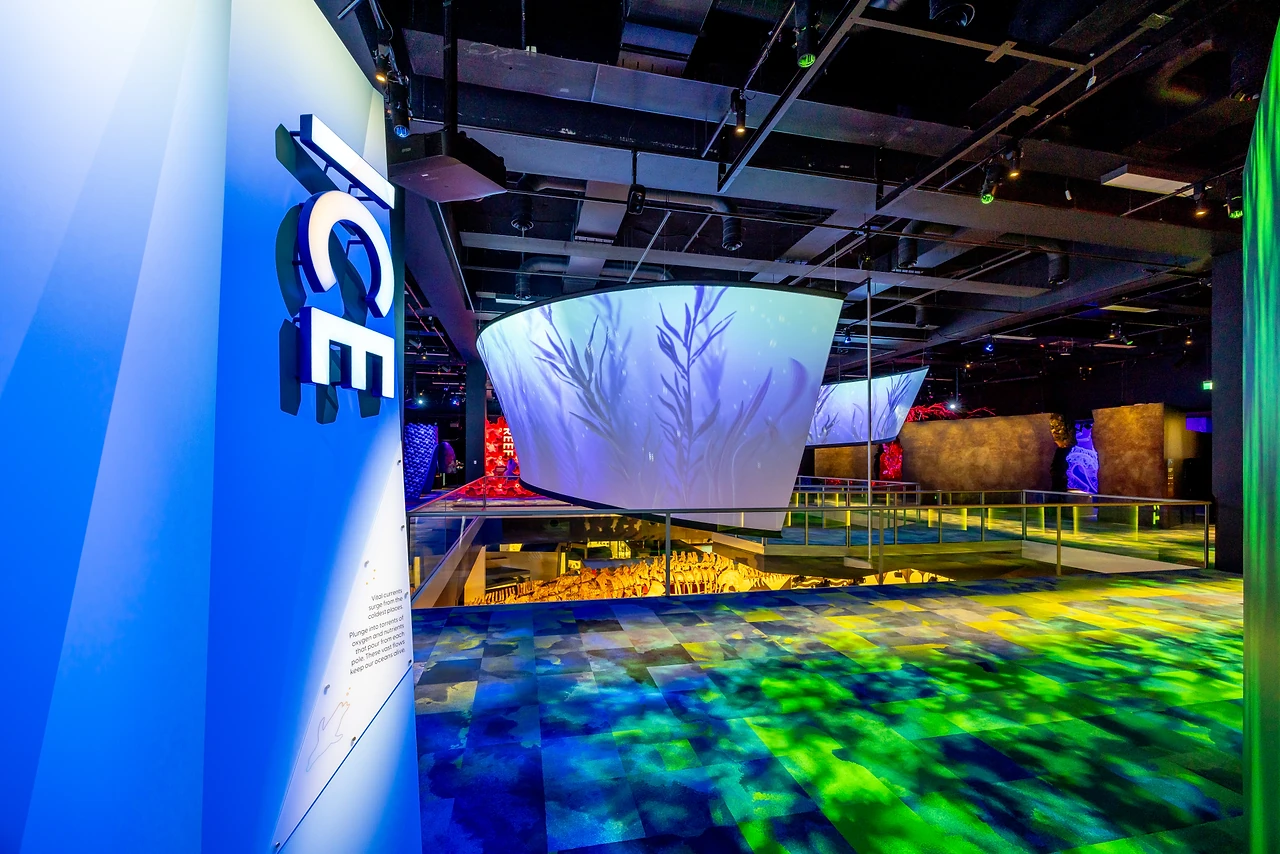
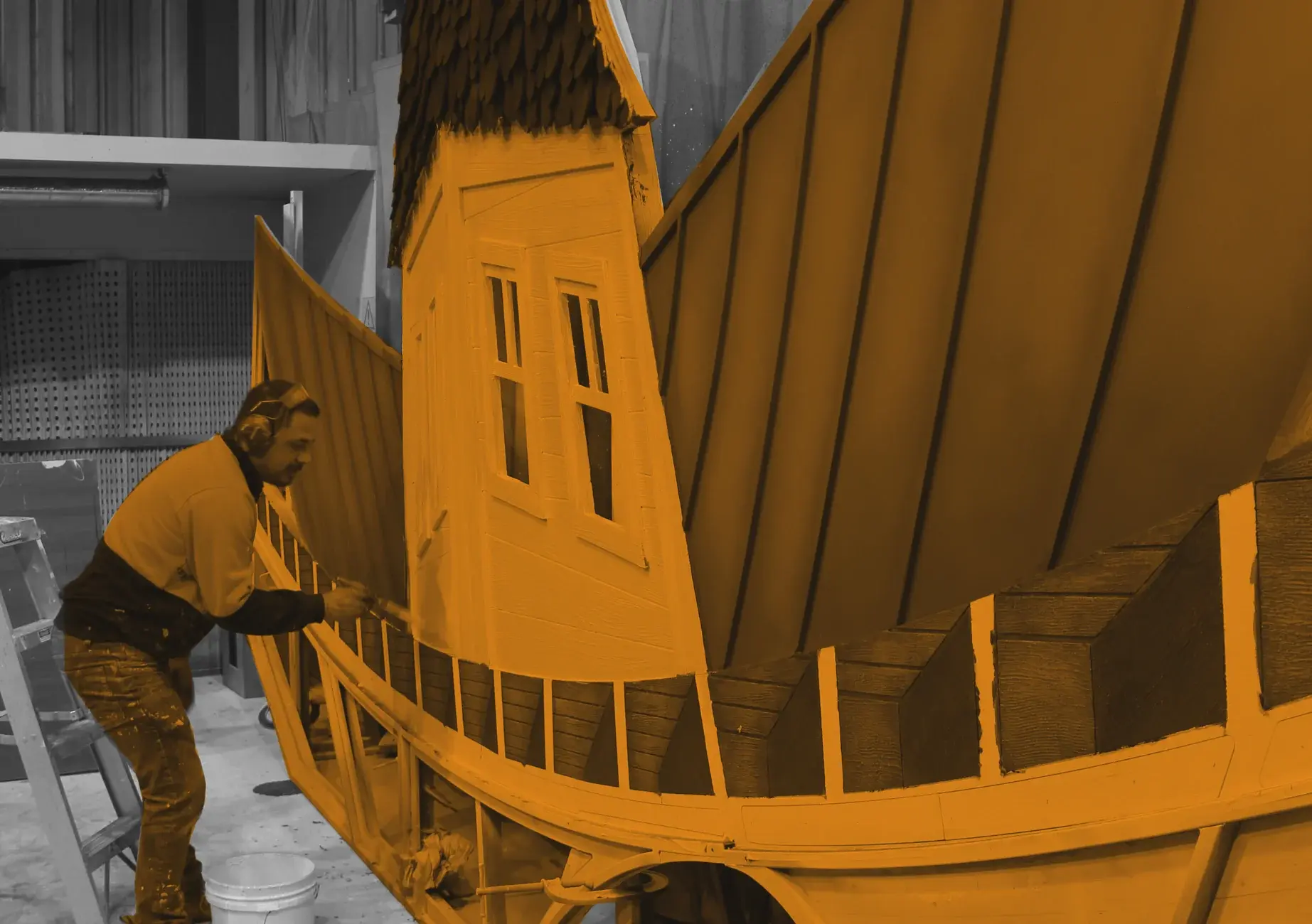
Colour-graded gallery environments, sculpted corridors and object casework, built as a shared staging to Studio Peter King's design.
Open 25 June 2021 to 16 January 2022, the fifth and final city of the world tour.
Treasures of the Natural World was the first collection the Natural History Museum, London had loaned to an Australian museum. It brought more than 200 specimens and objects to Melbourne Museum. A complete sabre-toothed cat skeleton. The heavy-footed moa. Charles Darwin's pet tortoise. The Latrobe gold nugget, raised in Victoria in 1853 and back in the state for the season.
Melbourne was the fifth and final city on the tour, after Tokyo, Singapore, Taipei and Quebec City. Studio Peter King designed the Melbourne staging for Museums Victoria, and Synthesis shared the build with Show Works (now TSA).
Four earlier venues had already set the standard for this loan. Under gallery light a visitor's eye moves from a specimen to the surface behind it in a second. A rough edge or an uneven finish pulls that eye away from the object. Touring collections also travel with fixed conditions: mount sizes, case footprints and lender requirements arrive with the objects, and the local build has to meet them exactly.
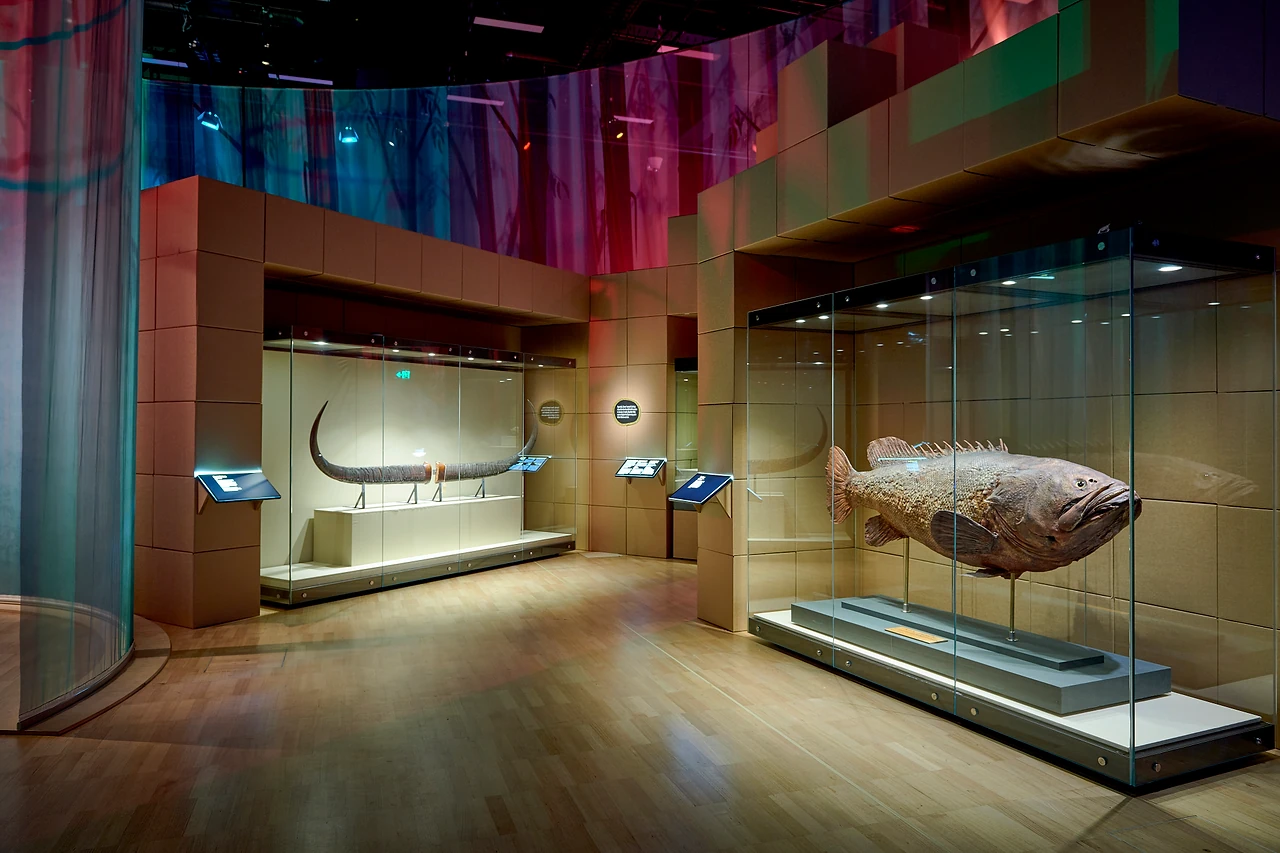
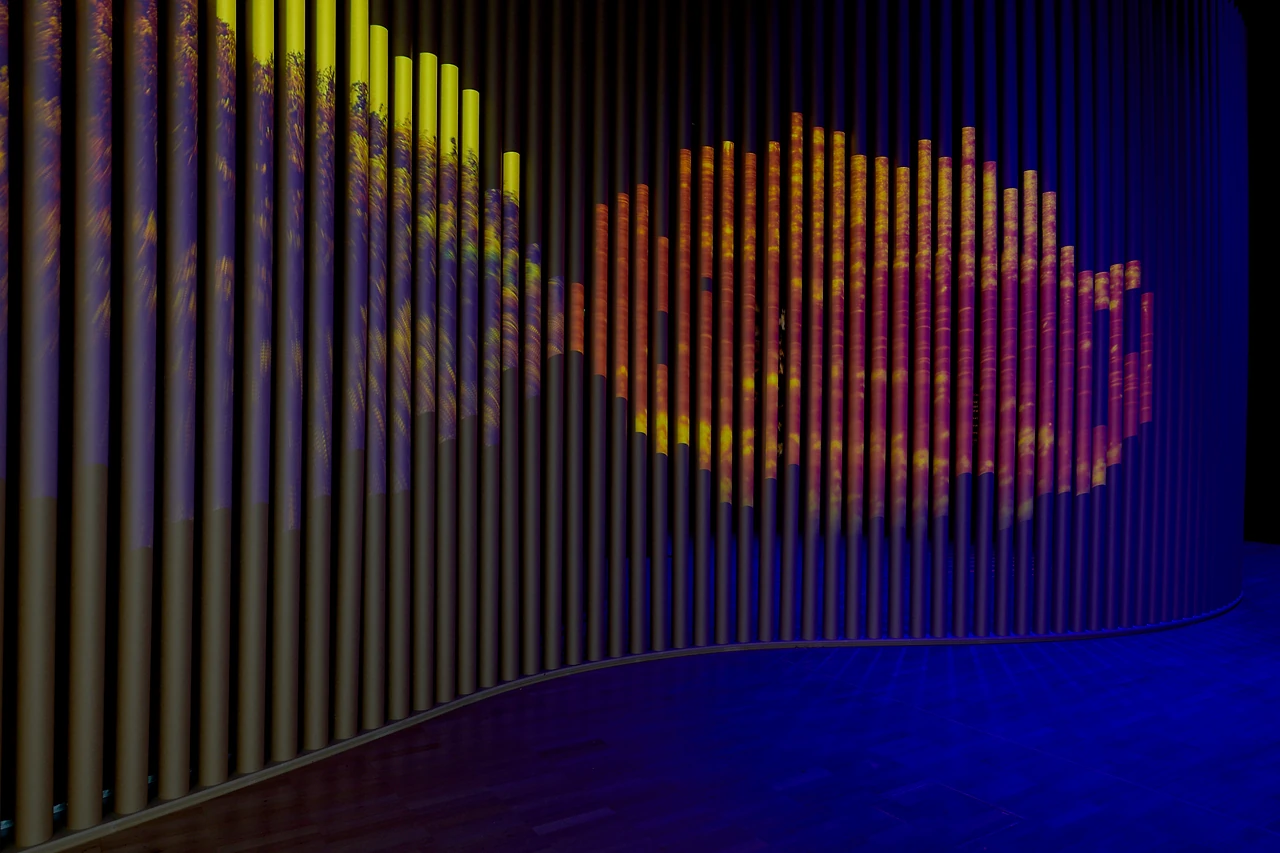
Studio Peter King's design graded the gallery environments by colour and linked them with sculpted corridors. One corridor was red, with curved, ribbed walls. Visitors entered past a curved wall of vertical timber battens carrying a colour projection. A colour-graded room depends on its finishes as much as its lighting: one wall a shade off under one lamp breaks the grade for the whole room.
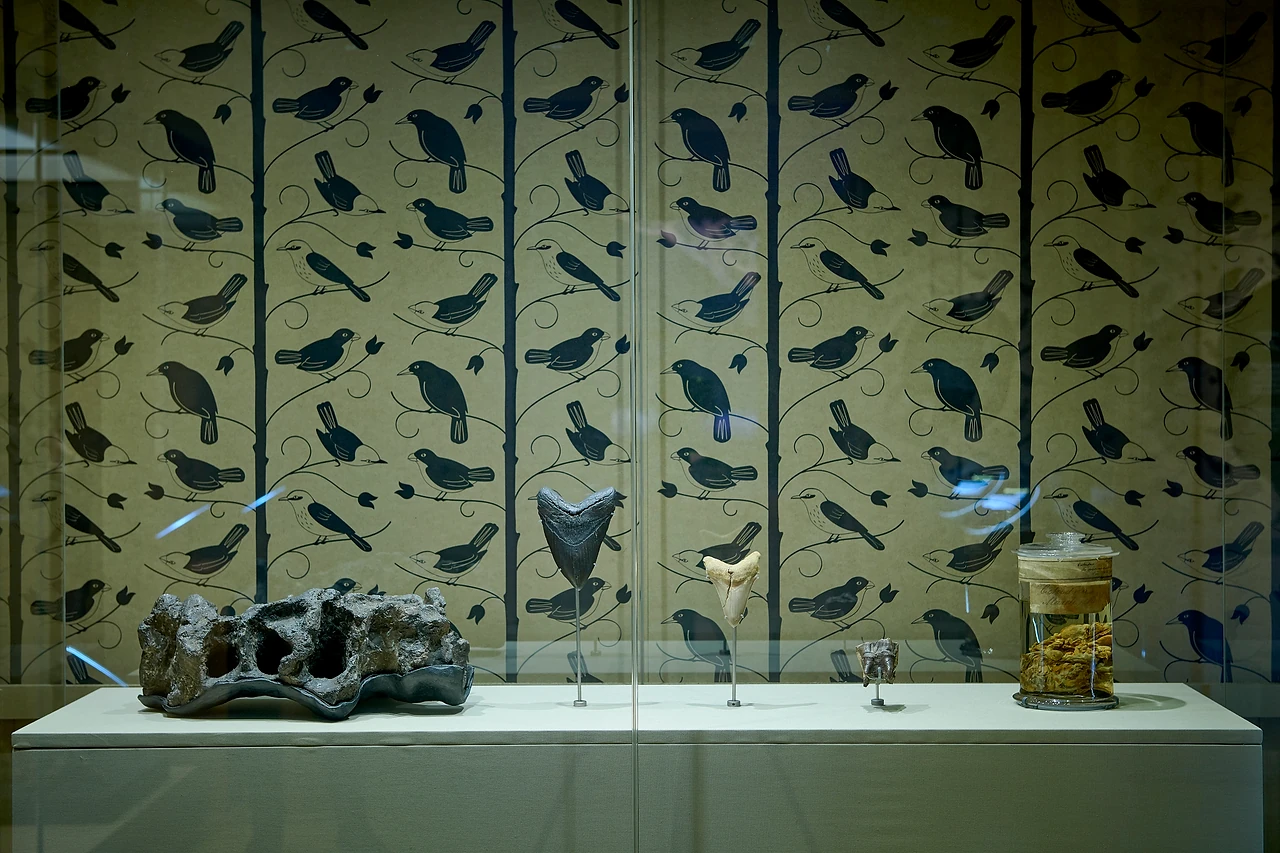
Object casework carried the collection through the run: glazed cases, plinths and alcoves sized to individual specimens, set against printed graphic walls. Casework for a loan is built to the lender's expectations as much as the designer's. Glass, plinth and case structure have to read as one piece around the object.
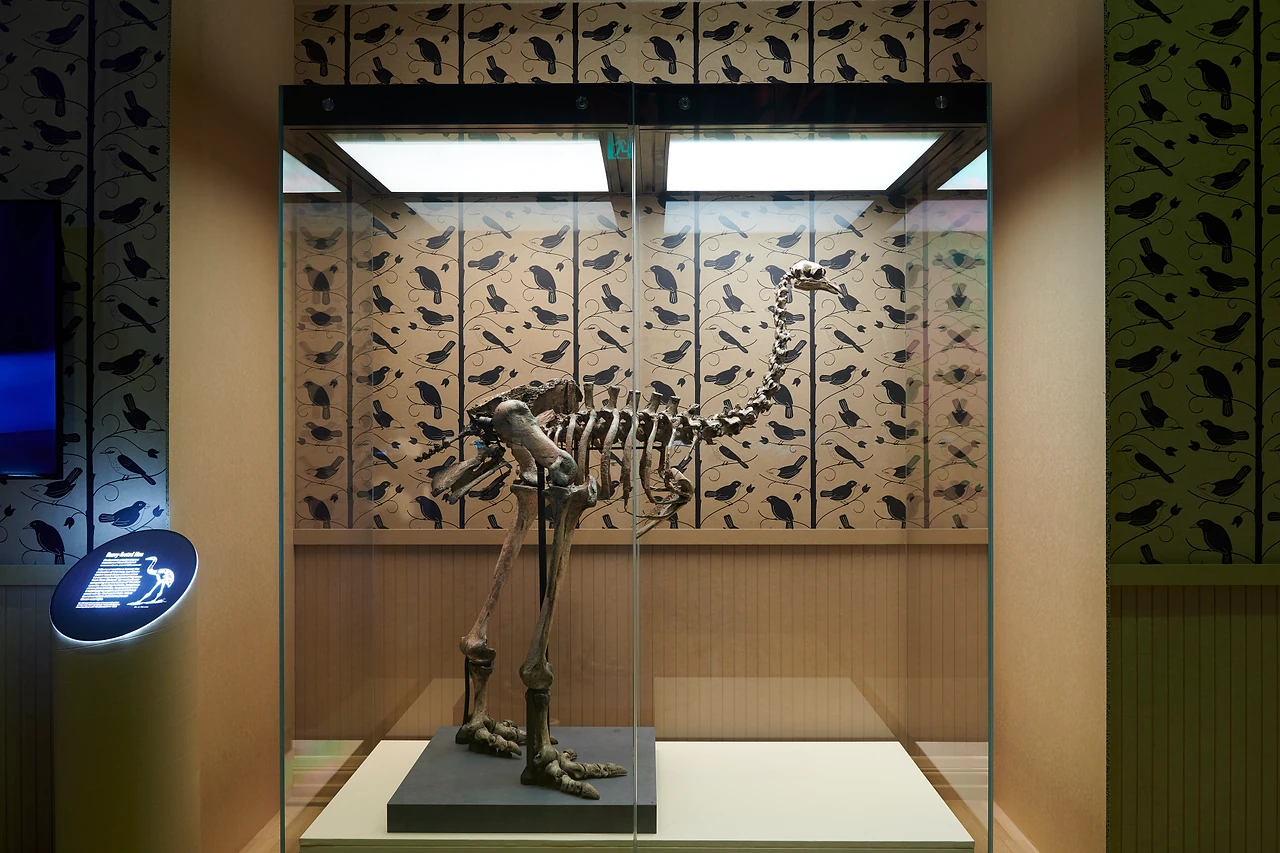
Placing more than 200 loaned specimens is work for a specialist object-handling team. TSA does not handle objects. The build team had every case, plinth and alcove finished inside Museums Victoria's programme, so the object specialists could work without a trade still on the floor.
After a pandemic delay, the exhibition opened on 25 June 2021 and ran to 16 January 2022. It was the last stop on a tour that drew audiences approaching 750,000 worldwide.
The staging was designed by Studio Peter King for Museums Victoria and built by Synthesis and Show Works (now TSA). That workshop and its casework trades are TSA's scenic workshop today. Photography: Eugene Hyland.
If your casework has to meet a lender's standard on a fixed opening date, talk to us early.