

Both D8 and D8+ are entertainment-rigging classifications under FEM 9.755 / DIN 56950. Same framework.
Article · Rigging
Updated 2 Jul 2026
Rigging
Hoist classification
D8 vs D8+: what the “+” actually buys you.
Two chain hoists can carry almost the same classification and behave completely differently the moment a component lets go. Here is what the plus adds, and when it is the spec that matters.
What happens when a component fails. D8+ adds a documented layer of redundancy the base grade does not require.
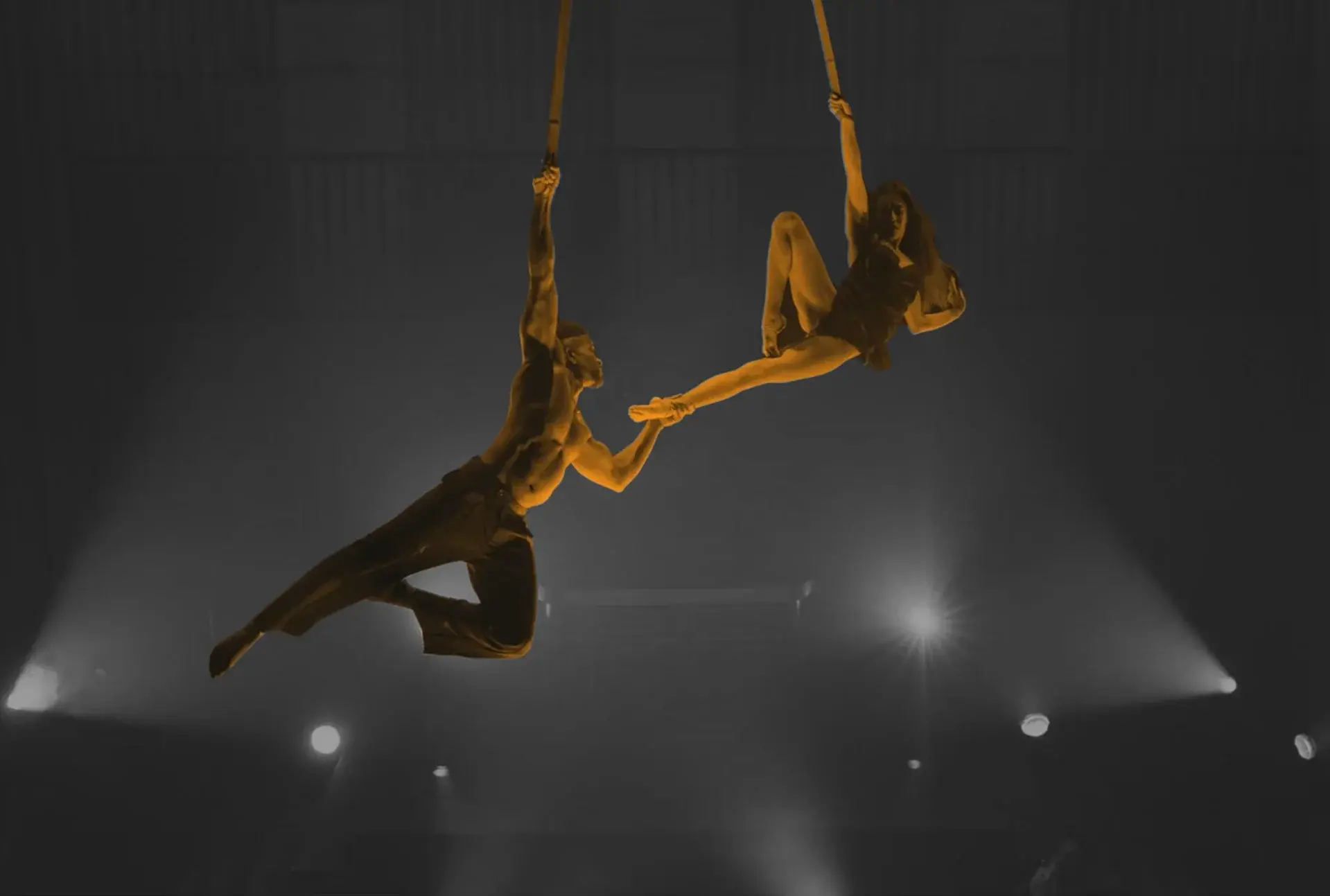
Load suspended above people means D8+. A short load-in with nobody underneath, and D8 does the job.
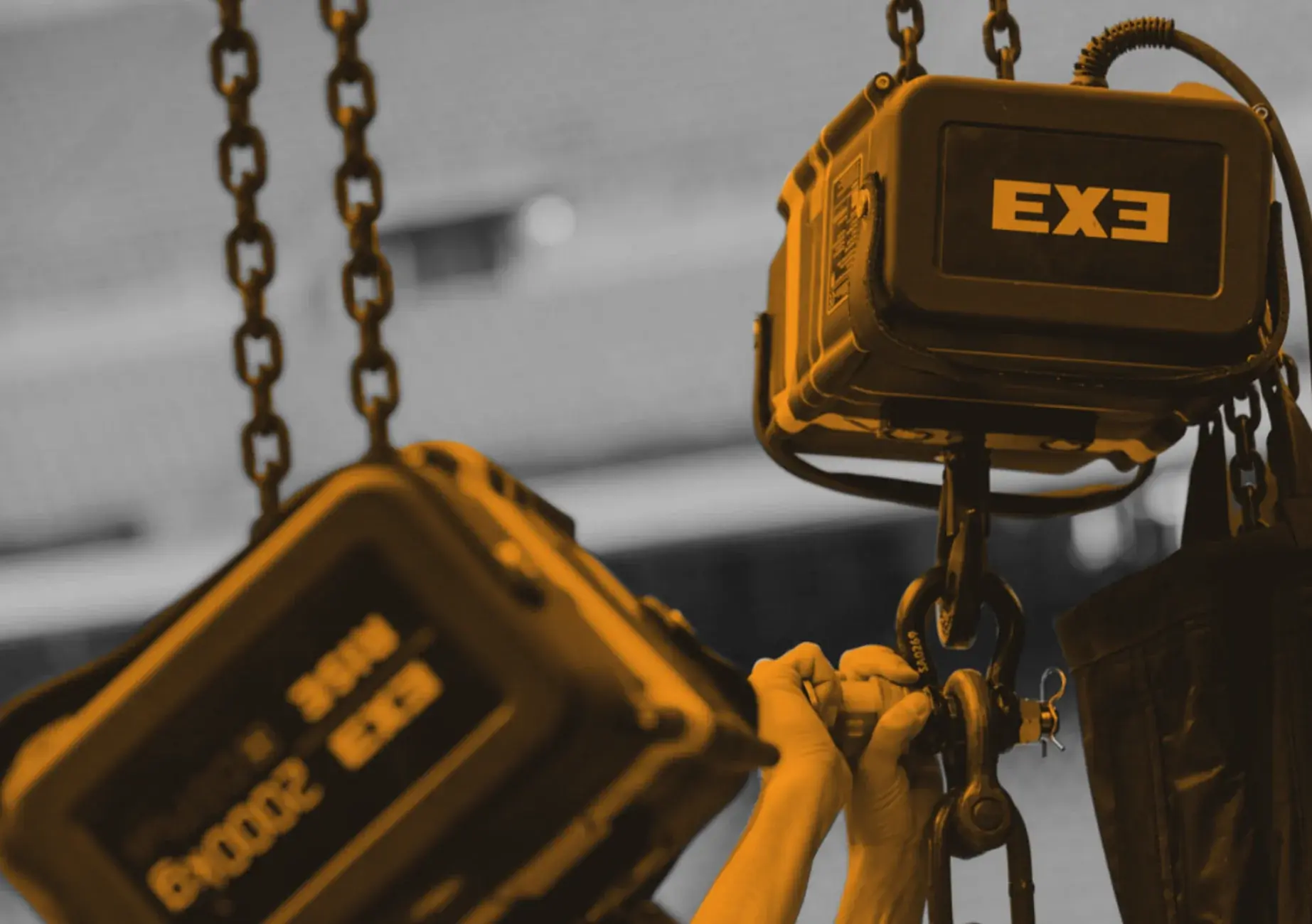
Every EXE Rise hoist, 350kg to 2500kg, is built to D8+ as standard.
A D8 hoist will lift the load. A D8+ hoist is built so the load does not come down.
Same standard. Same starting point.
Both D8 and D8+ sit under the same European entertainment-rigging framework, FEM 9.755 and DIN 56950, used here for overhead lifting in venues. Both are built to suspend loads over a stage. Both arrive with test certification.
On a spec sheet, the two can look almost identical: same duty rating, same load chain, same certificate in the folder. The difference is not in what the hoist does on a good day. It is in what happens on a bad one.
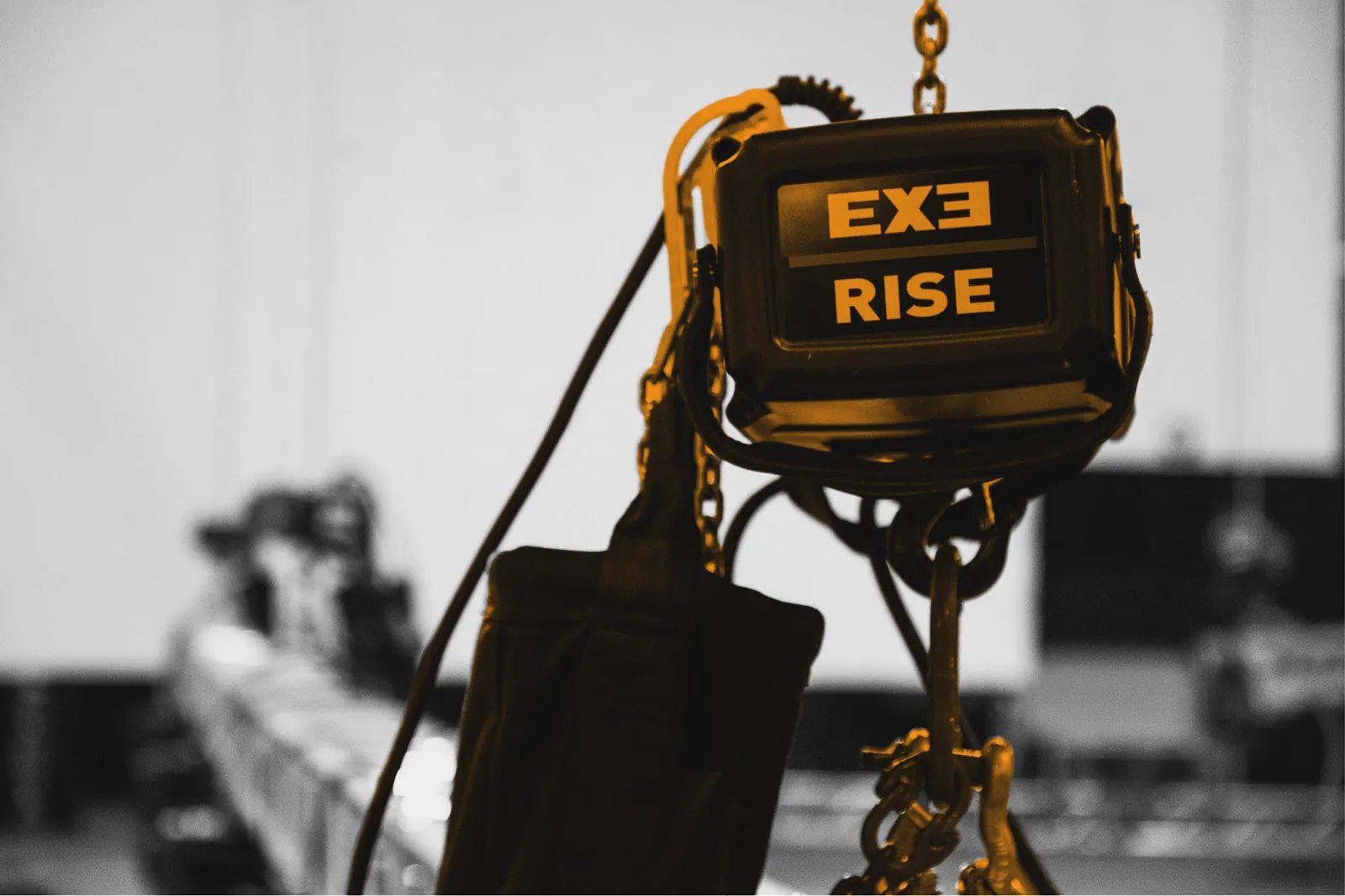
What the plus actually adds.
D8+ is not a bigger hoist or a heavier chain. It is a set of engineering requirements aimed at one outcome: no single failure drops the load. Three requirements do the work.
- A redundant secondary brake. A D8 hoist runs one working brake. A D8+ hoist runs two independent brakes, so if one lets go the second holds the load.
- No single point of failure. The whole load path, from motor to hook, is engineered so no single component failing causes an uncontrolled drop.
- Documented failure-mode analysis. The manufacturer has to show, in writing, what fails and what holds when each component is taken out of service.
Put together, that is the difference between a hoist that is rated to lift and a hoist that is engineered not to drop.
When the load is over people.
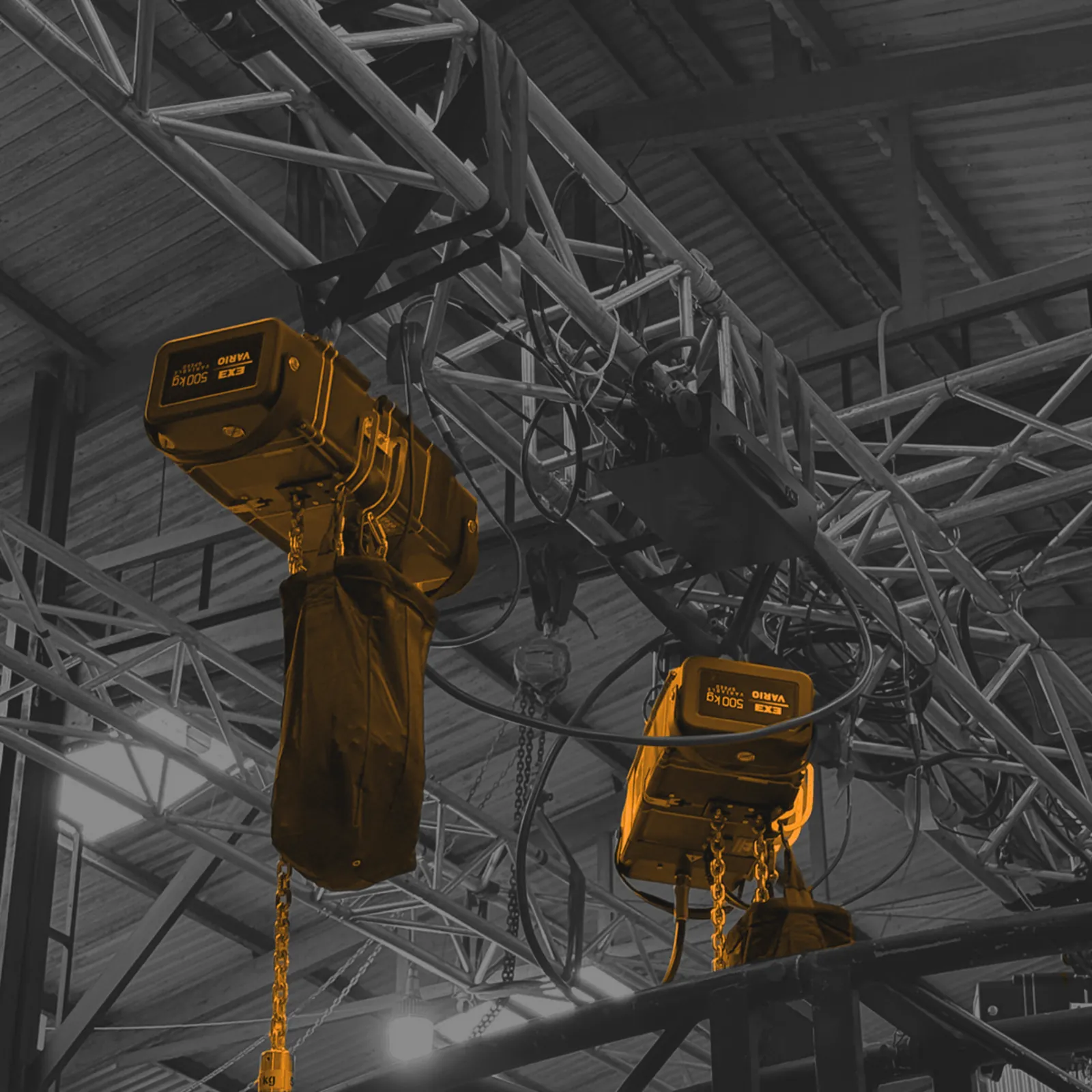
The line is straightforward to draw. If the load is suspended above an occupied space, whether that is audience seating, performers, or crew during a bump-in, D8+ is the specification that belongs there.
Australian WHS duties require lifting equipment used above people to be fit for that purpose, and a redundant brake with a documented load path is how you demonstrate it. A D8 hoist will lift that load; a D8+ hoist is built so it stays up. That is the whole reason the plus exists.
And when D8 is enough.
D8+ is not always the answer, and pretending it is does no one any favours. For short-term load-in, equipment moves, and rigging that is never flown above an occupied space, a D8 hoist is the correct, certified tool for the job.
The skill is matching the grade to the lift, not defaulting to the highest number on the page. If you are not sure which side of the line your application sits on, that is a conversation worth having before you buy, not after.
EXE Rise. D8+ as standard.
Every model in the EXE Rise range, from the 350kg through to the 2500kg, is built to D8+ as standard. Not as an upgrade. Not as a paid option. It is how the range is specified.
TSA stocks EXE Rise nationally, installs it, and services it in-house, so the classification on the label is backed by the team that keeps it certified. If it goes above a stage, we know it.
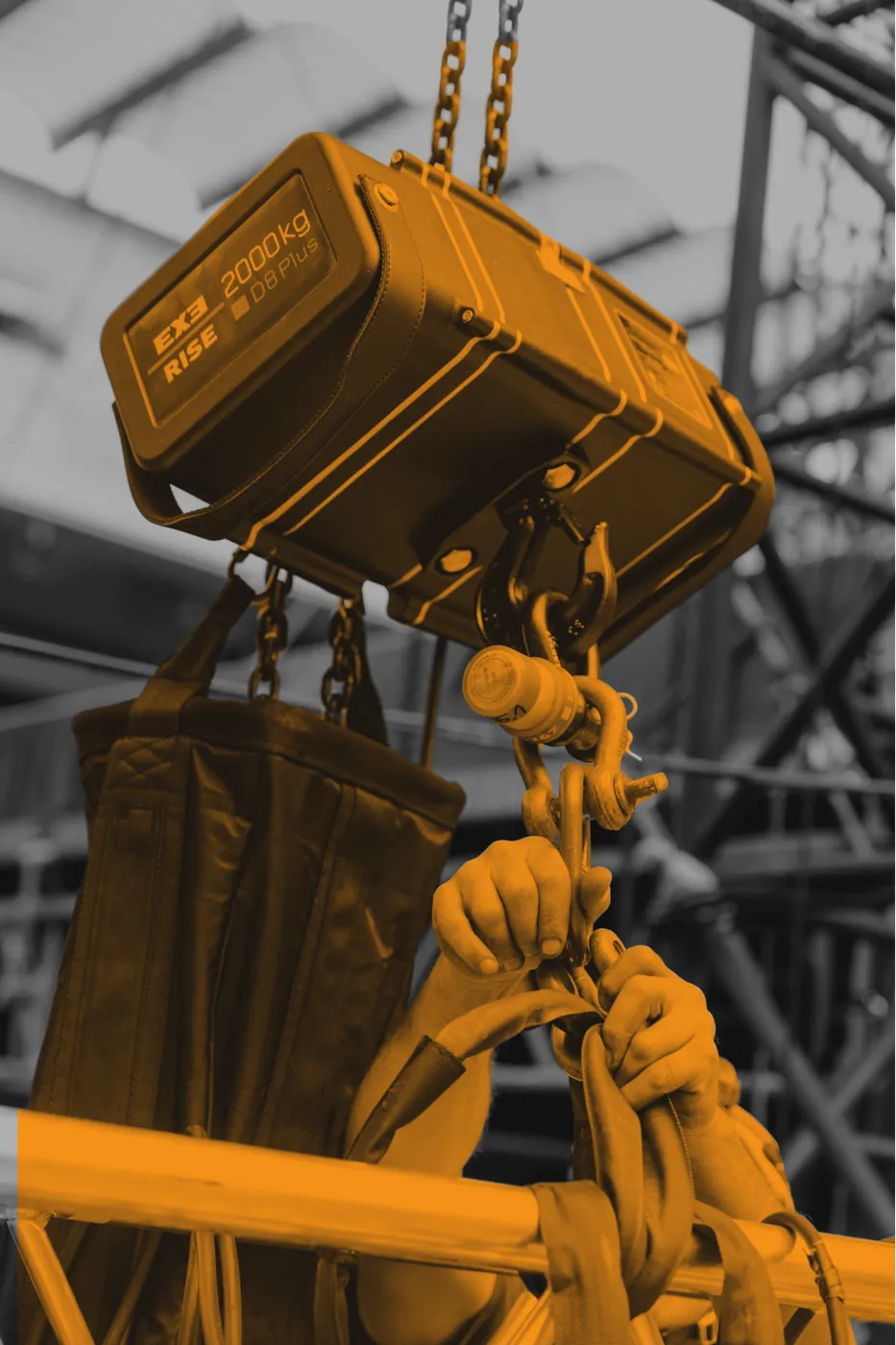
Specifying hoists you can trust above people?
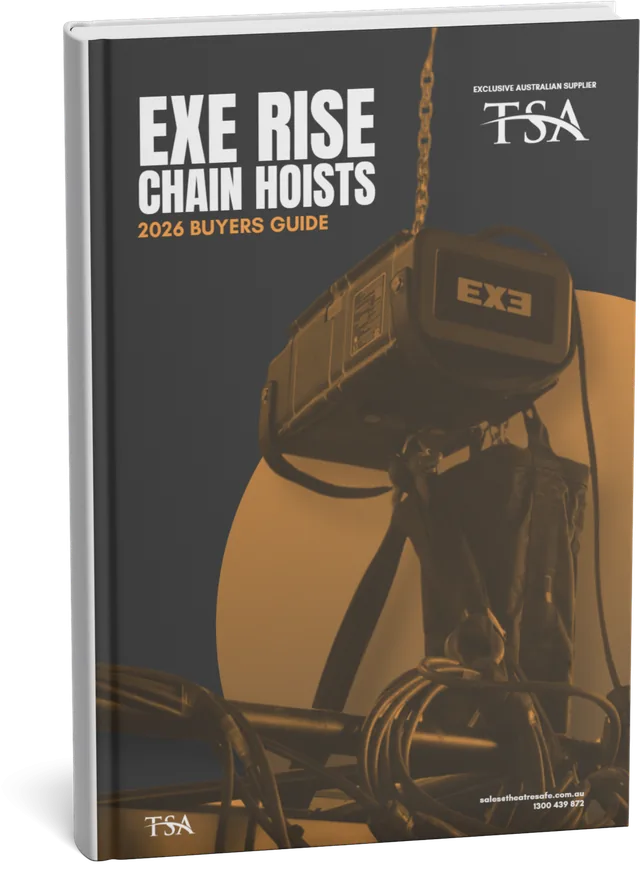
Free download
Get the EXE Rise Buyers Guide.
The full range, the D8 Plus decision framework, and the specs. We will email you the PDF.
Download form coming soon.
EXE Rise chain hoists.
350kg to 2500kg, D8+ as standard. Stocked in Australia, installed and serviced by TSA.
Browse EXE Rise