

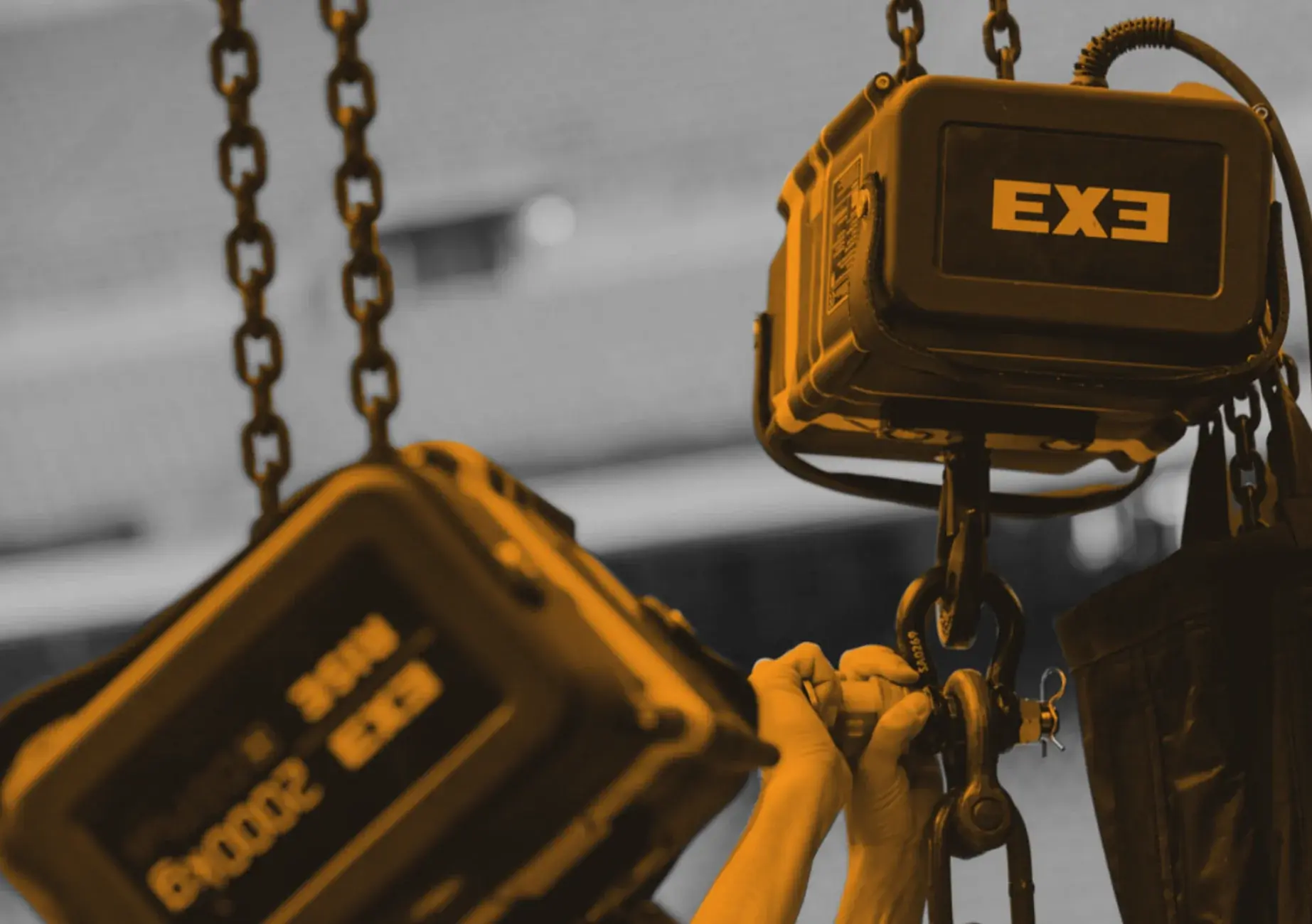
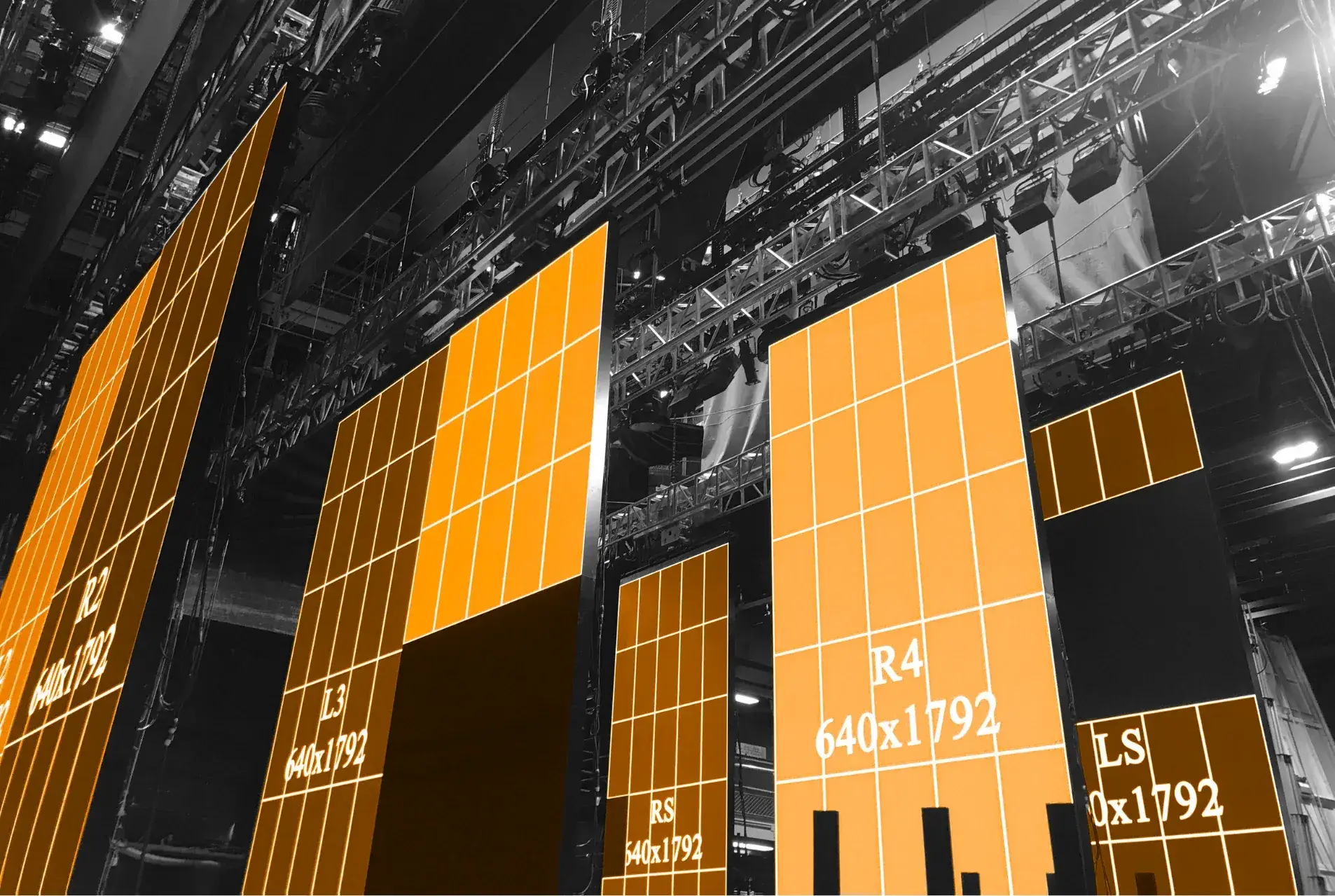
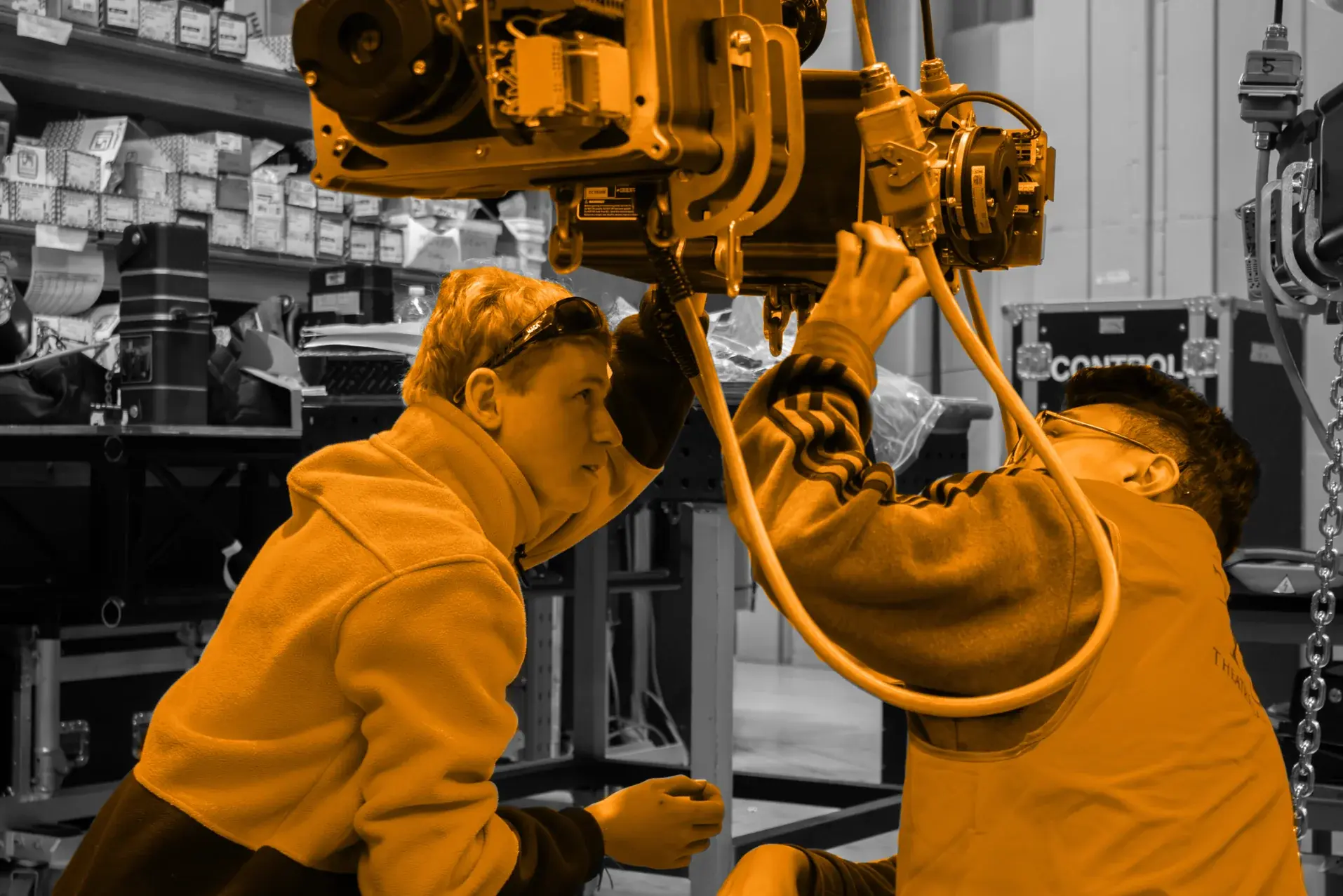
Improvised, un-rated rigging hardware. Fix: rated, marked gear with a stamped WLL and a test certificate.
Rigging & Safety
Updated 12 May 2026
Rigging
Stage safety
5 community theatre safety mistakes (and the fixes).
The five we see most often when we walk into a volunteer-run venue for the first time, with the rated, supported fixes that keep councils and insurers satisfied.
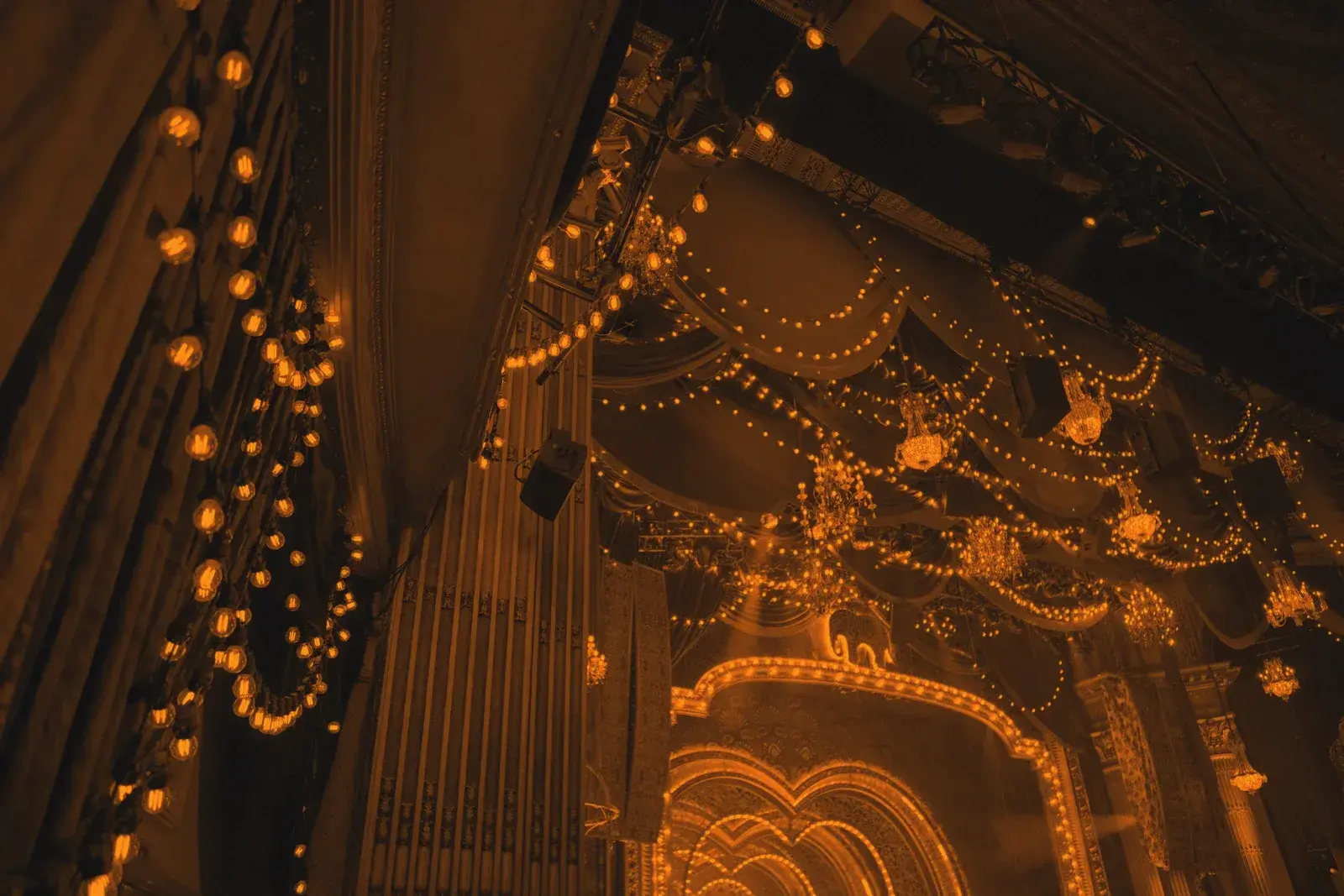
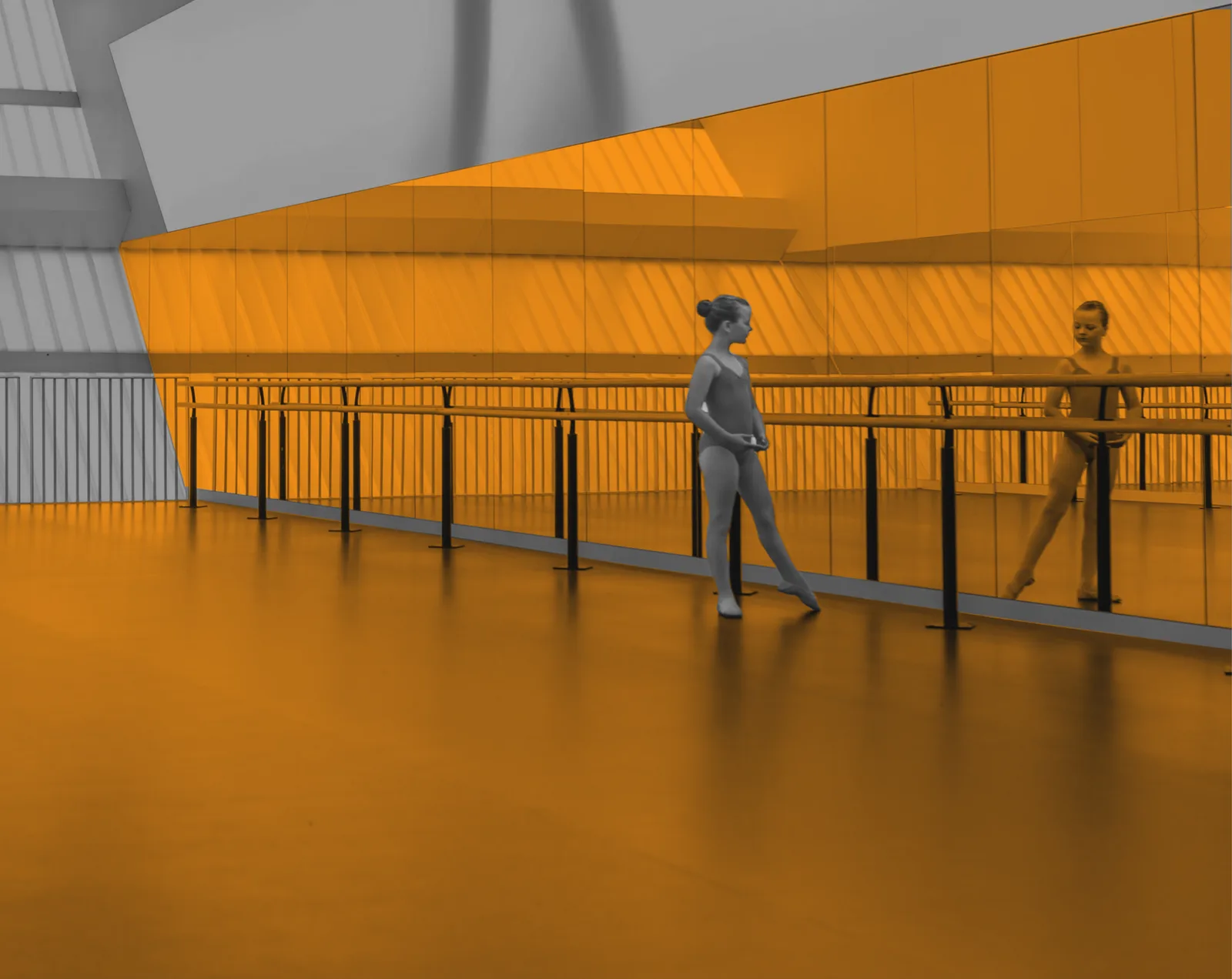
Patchy masking and cable runs left as trip hazards. Fix: a proper track and drape system, plus theatre-grade cable management.
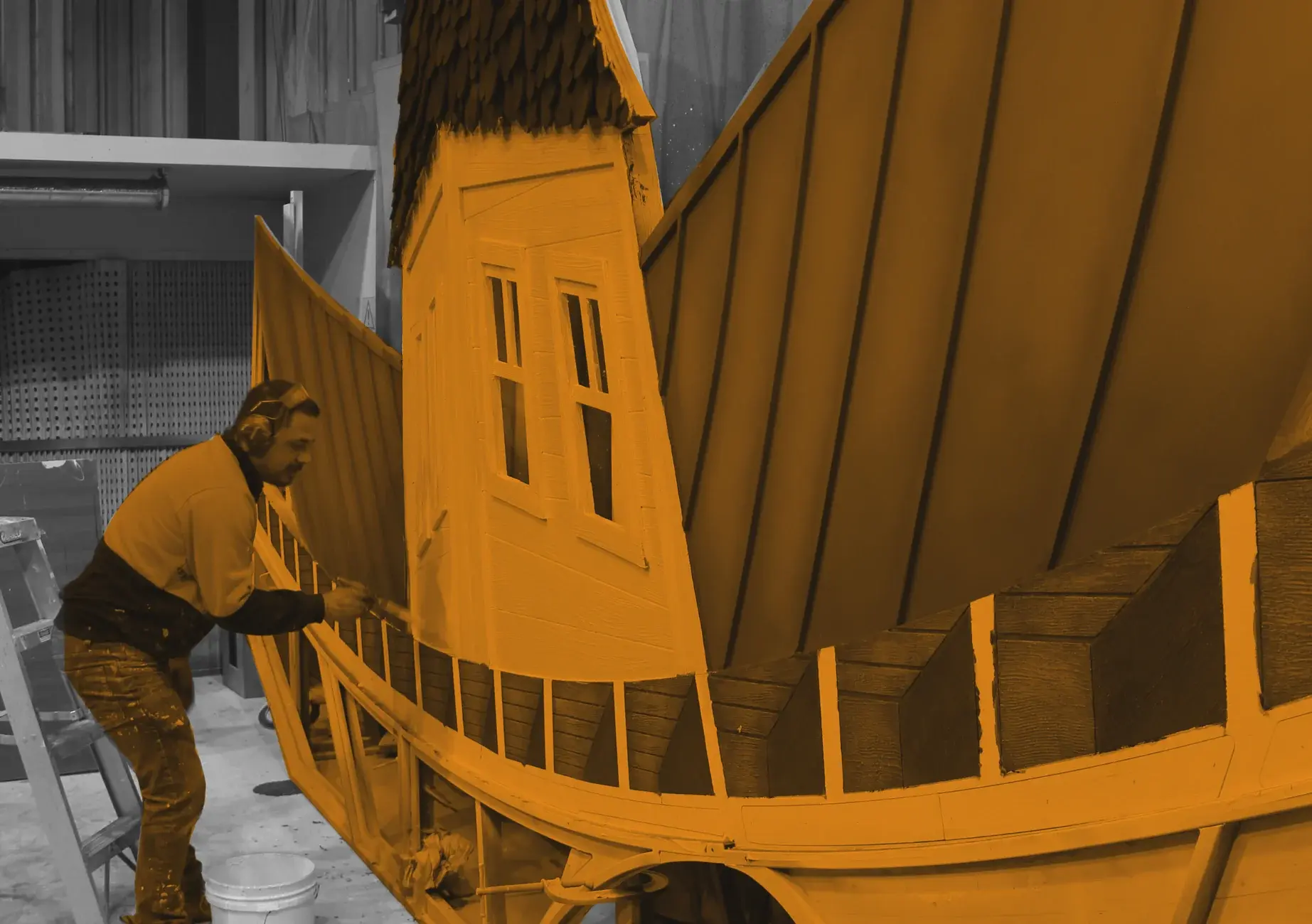
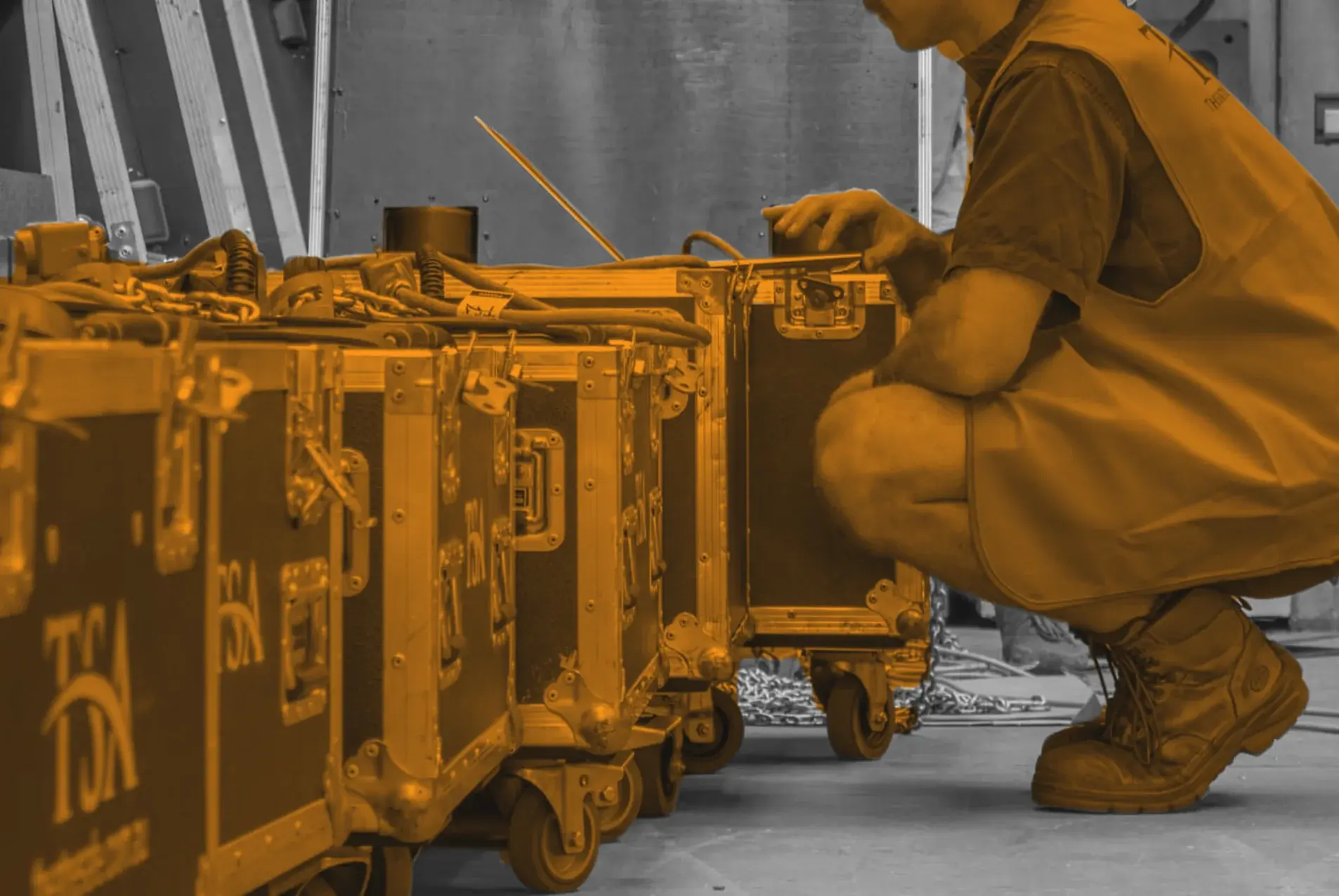
Disorganised storage and unsafe pack-downs. Fix: labelled trolleys and racks sized to the venue.
Skipped inspection and deferred maintenance. Fix: a current annual report your committee can hold against AS 4991.
None of this is a problem until it becomes one. A single afternoon of inspection and rated hardware prevents the kind of incident that closes a season.
Improvised rigging and un-rated hardware.
Hardware-store chain, builders rope, and un-rated clamps still turn up on overhead rigs in volunteer venues across the country. They go up because they were low-cost, available, and nobody has questioned them in years. They stay up because the load has not failed yet.
Un-rated hardware has no traceable Working Load Limit, no test certificate, and no place on a performance rig. A failed clamp, a dropped bar, or an un-rated chain on a scenic piece is the kind of incident that closes a season and triggers an insurance review.
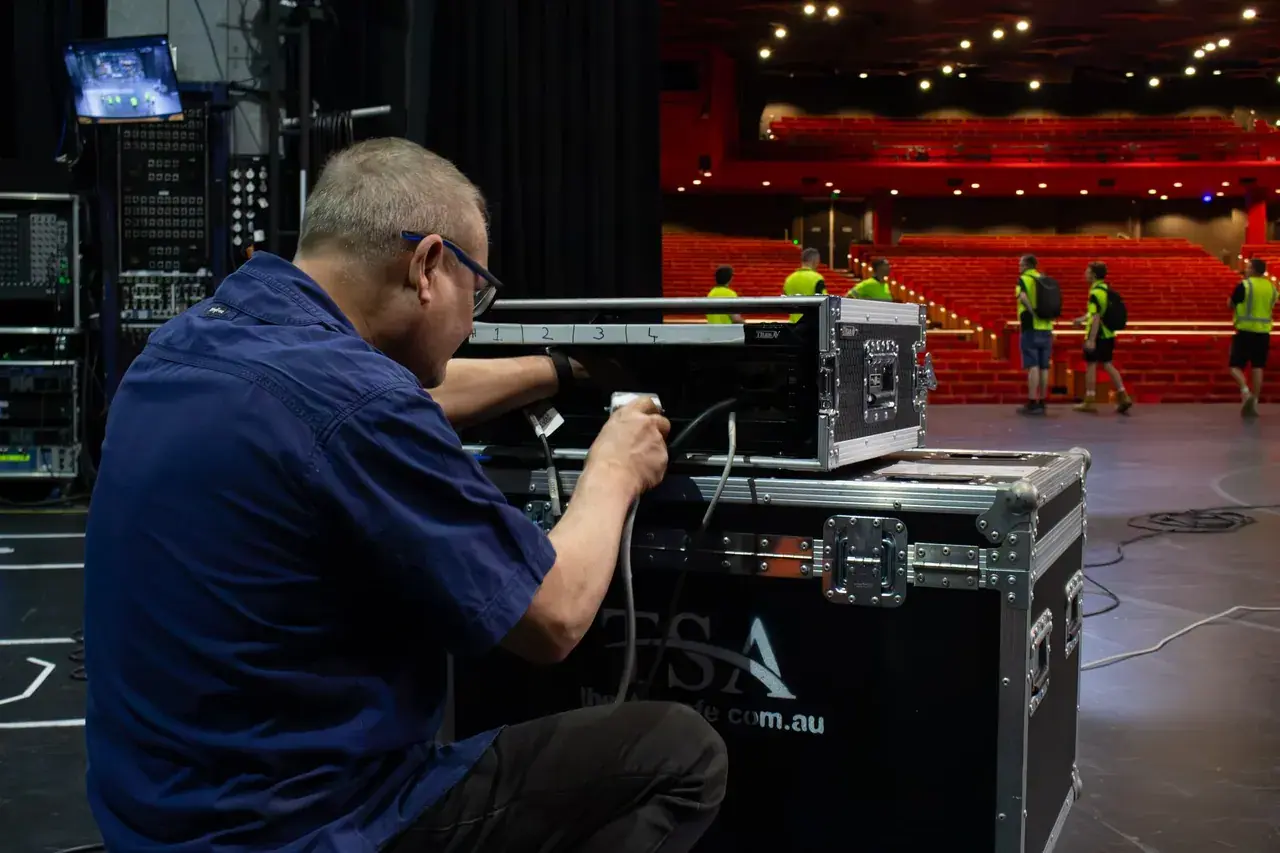
The fix is straightforward. Every overhead component, from clamps and couplers to chain and shackles, must be rated, marked, and paired with a secondary safety bond. A rigging inspection identifies un-rated gear, documents what stays, and gives volunteers a load chart and signage so the safe limits are visible at the rig.
Patchy masking is a safety problem, not just a look.
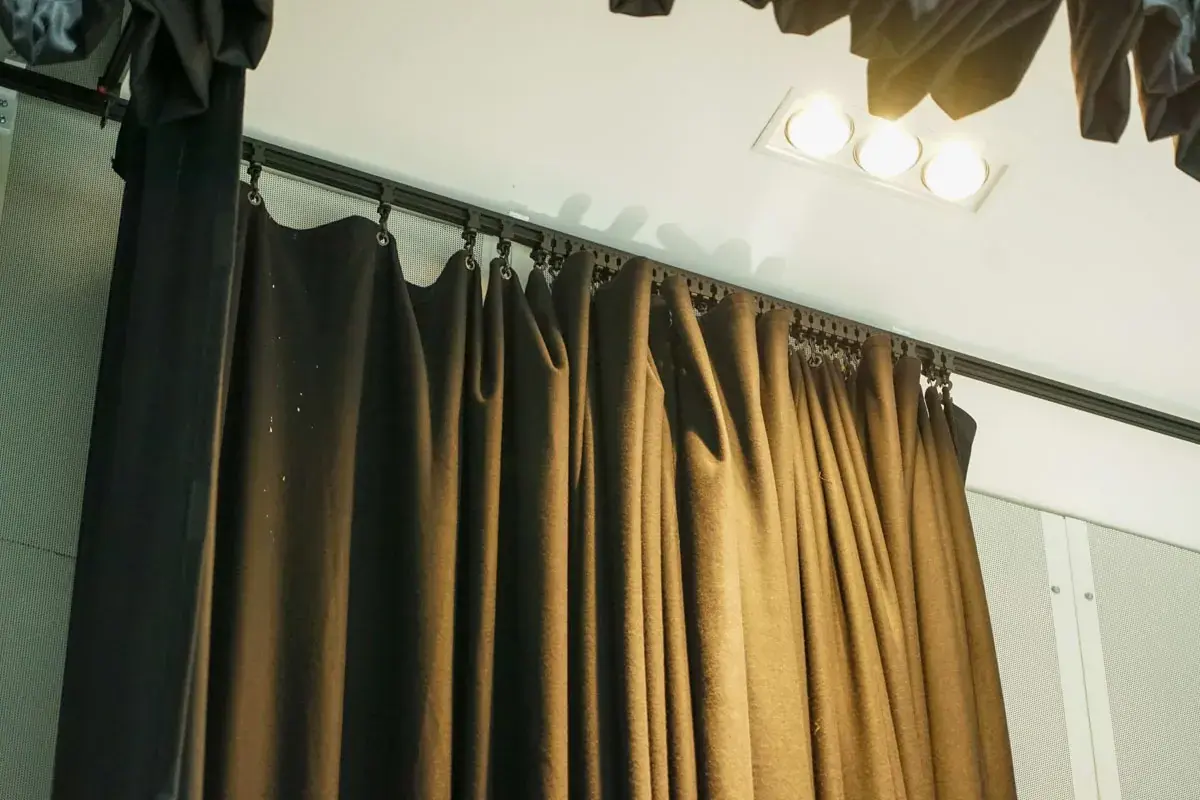
Mismatched curtains, daylight bleed through the wings, and visible storage are usually treated as a presentation problem. They are also a safety problem. Inconsistent masking obscures sightlines for crew, hides trip hazards in the wings, and turns side-stage into an obstacle course during scene changes.
The fix is to fit a proper track system with rated, fire-retardant drapes for legs, borders, and a full blackout traveller. Triple E track is the industry standard for the load and cycle counts a community venue needs.
Drape and track packages can be specified to suit a school hall, community hall, or purpose-built theatre, and shipped with installation drawings your volunteers can follow.
Cable runs left as trip hazards.
Loose leads draped across crossovers, gaffed at the last minute, or run through audience walkways are the single most common floor hazard in community theatre. They cause stumbles in the dark, stress the technical team during the bump-in, and leave the venue exposed if an audience member trips during ingress or egress.
The fix is routine, repeatable, and low-cost to hold. Use theatre-grade gaffer, spike tape, and glow tape to fix and mark every run. Labelled looms, cable carts, and lighting trolleys keep cables off the deck and ready for the next show.
Stage accessories and rigging hardware can be specified alongside the drape works so the whole rig is tidied in one visit.
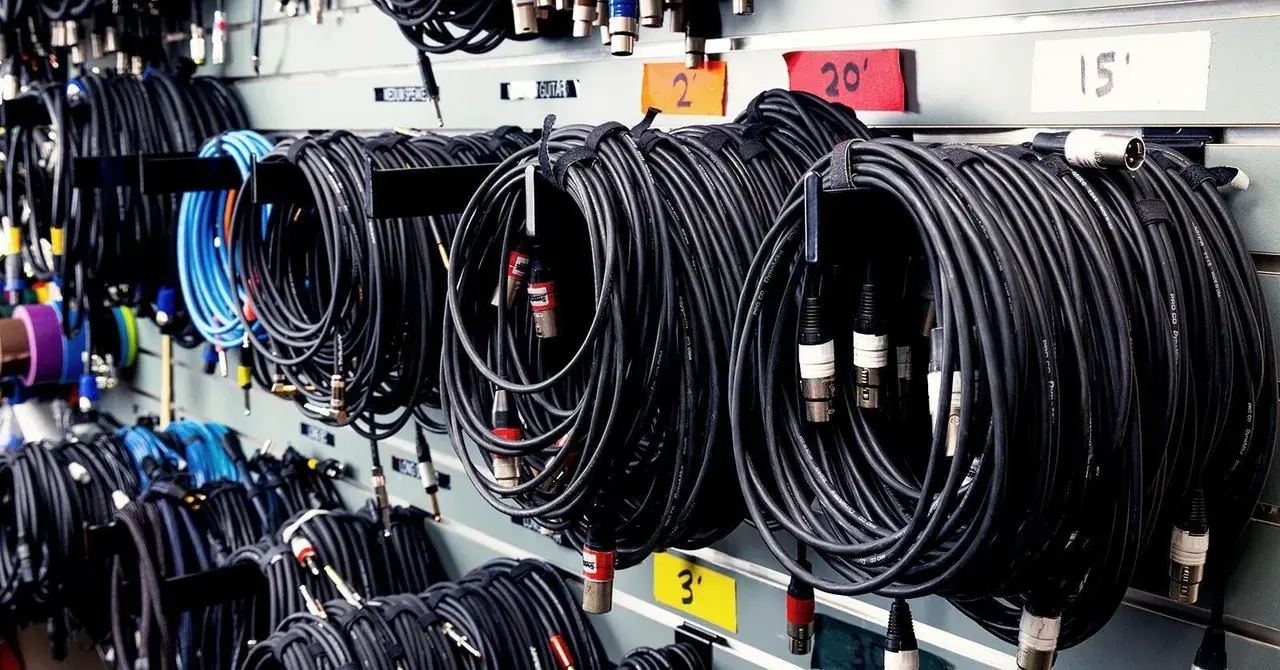
- Fix and mark every run with theatre-grade gaffer, spike tape and glow tape
- Build labelled looms so the same run sets up the same way each show
- Keep leads off the deck on cable carts and lighting trolleys
- Clear every crossover and audience walkway before the house opens
Disorganised storage and unsafe pack-downs.
Community theatres share their space. Halls return to council use, schools return to assemblies, and the rig is broken down and stored every few weeks. When storage is haphazard, gear gets damaged, hardware goes missing, and stacked items become falling hazards for the next volunteer through the door.
The fix is to specify lighting trolleys, dance floor trolleys, and modular scenic storage sized to the venue. Label every trolley and bay so changeovers are repeatable and safe regardless of which volunteers are on the night. A site visit will scope the storage footprint against the rig and recommend trolleys and racks that suit the doorways, lift access, and pack-down cycle.
- Specify trolleys and modular storage sized to the doorways and lift access you actually have
- Label every trolley and bay so the pack-down is the same each cycle
- Keep stacked items low and secured so nothing becomes a falling hazard
Skipped inspection and deferred maintenance.
Tracks bind, rigging hardware corrodes, chain motors lose calibration, and fly bars accumulate wear. None of that is visible from the auditorium floor. Many community venues skip the annual inspection to save the line item, then discover the cost when an insurer asks for a current report or a council asks for a current certificate.
The fix is to schedule an annual inspection that delivers a photo report, prioritised actions, and a service plan a committee can take to the next council or board meeting. Rated, documented, repeatable. Annual service and inspection covers rigging, tracks, drapes, and motorised gear under one report so nothing falls between trades.
- Book an annual inspection that produces a photo report and prioritised actions
- Hold one report covering rigging, tracks, drapes and motorised gear together
- Keep a current certificate on file for the insurer and the council
- If you cannot say when the rig was last inspected, it is due now
Prevention costs less than the fix.
None of these five mistakes need to wait for an incident to be corrected. Rated hardware, proper masking, tidy cabling, organised storage, and a current inspection report are the baseline a volunteer-run venue can hold against AS 4991, council expectations, and the insurer's renewal questions. Walk the rig once with someone qualified, fix the items the report flags, and you are ahead of most community theatres in the country.
TSA has been outfitting and inspecting community theatre rigs Australia wide since 2014. We specify the rated gear, supply the drapes and tracks, train the volunteers on safe use, and come back annually to inspect and service. The committee gets a documented rig. The volunteers get a safe stage. The audience gets the show.
We've got the technical side. Your volunteers get to focus on the show.
Walk your rig once with someone qualified.
Book a site visit
Venue Systems Health Check.
One afternoon, one documented report. We walk the rig, flag the un-rated gear, scope the masking and storage, and give your committee a prioritised action list to hold against AS 4991. No incident required.
Rated rigging, hardware & consumables.
Clamps, couplers, chain, shackles and the cable management to tidy the whole rig in one visit. Marked, rated, certified.
Browse rigging at TSA